


Commercial Operational Readiness
Get Dock ready: A practical guide


Dock-based operations move drones from ad-hoc flights to persistent, remote coverage. Launching a dock program requires coordination across leadership, IT, facilities, and flight operations. Regulatory approvals, site infrastructure, and program ownership must be aligned before hardware ships and commissioning is scheduled.
Skydio has guided hundreds of organizations through this process—from FAA waiver strategy to site validation and stakeholder alignment. Our team partners with yours to define the plan, identify dependencies early, and keep milestones on track.
Own the role: the program manager.
Every successful remote-flight program has one person who keeps it all connected: the Program Manager. This role spans planning, commissioning, and long-term operations.
The best Program Managers combine leadership and planning skills with enough technical fluency to troubleshoot Dock systems and enough regulatory awareness to navigate FAA rules and local policy.
Skydio provides templates, readiness trackers, and proven workflows so your Program Manager has the tools to succeed from day one.

Get in front of the right people early.
Each phase requires different stakeholders, and each play a critical role in the program deployment. Identifying them early prevents the most common delays we see across customer programs. Skydio helps you map these contacts and manage dependencies so nothing falls through the cracks.

IT
Because HD video streaming and real-time BVLOS operations require robust connectivity, IT teams should be involved early to ensure firewall and network configurations are in place before hardware arrives.

Facilities and Engineering
The Dock needs power, network, and a suitable location. Facilities own permitting, contractor coordination, and site compliance.

Legal and Procurement
Contracts, compliance, and vendor authorization require early engagement to avoid bottlenecks at agreement time.

Policy and Leadership
Sponsors approve resources, align plans with organizational expectations, and remove blockers.
Dock readiness is built on three core required phases:
01
Regulatory approval. FAA waivers for beyond visual line of sight (BVLOS) flight have been submitted and approved.
02
Site and infrastructure readiness. The location meets access requirements and power, network, and radio systems are validated.
03
Team training and operational readiness. Pilots are certified, a program manager is driving the effort, software integrations are tested, and stakeholders are aligned.

Why readiness matters.
The biggest gains come from addressing critical steps early, before they affect operations. Our structured readiness process identifies and resolves these blockers before they impact operations.


Phase 1:
Regulatory approval.

A Certificate of Waiver (COW) from the FAA is required for BVLOS operations. This is often the longest lead-time item in your timeline, so start early. Begin the waiver process before site work is complete. Early submission helps you stay ahead as your program scales.
Skydio's regulatory services support strategy, drafting, and submission, drawing on experience securing hundreds of BVLOS waivers nationwide.
Phase 2:
Site and infrastructure readiness.

Site selection is one of the most important decisions in your program. Skydio supports organizations through detailed site surveys, verifying structure, access, power, and communications. Ensuring you can be confident your site is ready before your hardware ships.
When selecting a suitable Dock site, the location needs:

Solid accessible surface
The Dock must sit on a stable, outdoor structure you can safely walk on.
Level platform
The surface must be verified level (within 3 degrees).
Unobstructed sky view
with a 40° cone of clearance around the dock is required for safe launch and landing operations.
Adequate clearance
At least 12 feet of clearance from surrounding structures.
Designated space for external radio
Space for an external radio antenna with line of sight to the flight area

Preparing your infrastructure.
Power, networking, and radio are the backbone of every dock-based site. Each needs to be in place before installation. These are familiar infrastructure components, and Skydio provides detailed requirements and works with your teams to verify everything is ready.

Power
The Dock requires a dedicated circuit. Where temperatures reach freezing, 220V is required for the Dock's built-in heaters. Ground sites often need trenching for conduit. Your facilities team will lead this work, and Skydio provides the specifications and guidance to keep it on track.

Network
The Dock requires reliable, high-bandwidth wired connectivity. Your IT team will need to verify the connection, firewall rules, and performance meet operational thresholds before hardware ships. Skydio provides a detailed network configuration guide and works alongside your IT team to confirm readiness.

Radio antenna
The external antenna needs strong signal coverage with minimal interference from nearby RF equipment. Place it as high as practical while keeping it accessible for maintenance, with power and network access at the antenna location. Skydio helps identify optimal placement during the site survey.
Phase 3:
Team training and operational readiness.
Operations begin with trained personnel and defined workflows.

Software and integration preparation.
Skydio's API and integration catalog connect drone data and mission triggers into your existing systems, supporting fleet management, video streaming, asset management, and situational awareness.
Before launch, identify which integrations align with your mission needs and verify they're configured so data flows automatically from capture to your downstream applications.
Skydio's Paraverse simulation environment lets you validate configurations and test mission workflows in a virtual environment before going live, without risking hardware or impacting operations.

Pilot training
Pilots must be certified and trained in mission planning, remote flight procedures, emergency protocols, and the software used to manage dock-based operations. Training is scheduled to align with commissioning timelines.

Team operations readiness—defining your operational workflows.
Technology enhances the process—it does not replace it. Before launch, define how the Dock fits into daily operations: who initiates flights, who monitors missions, how findings are documented, and how data is reviewed and stored.
A 24/7 security program looks different from an inspection workflow, but in both cases, clearly defined workflows prevent confusion and ensure your team captures full value from the system. Skydio shares best practices from similar commissionings to help you build yours.
Be ready when hardware arrives.
The earlier preparation begins, the fewer surprises at launch, and each new site builds on the last as your program scales.
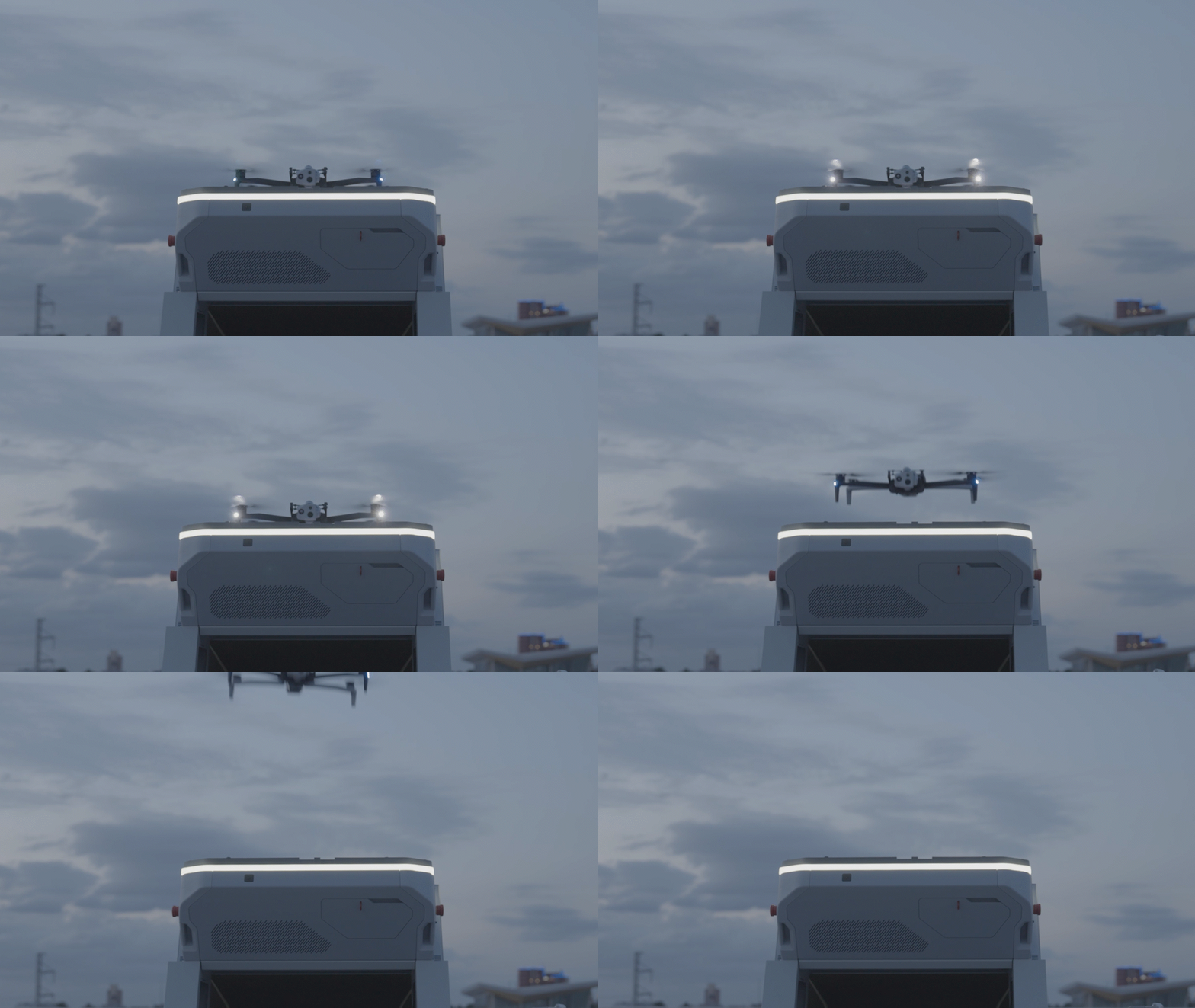
Commissioning proceeds smoothly when the following are complete:
- Power installed and tested.
- Network and firewall configured and verified.
- FAA waiver submitted and approved.
- External antenna location chosen and prepped.
- Safe, clear site access for all roles.
- Program Manager assigned and actively managing.
- Stakeholders engaged and aligned.
- Integrations scoped and underway.
- Deployment date scheduled and vendors notified.